 shefis.com – Trending News & Sharp Headlines
 shefis.com – Trending News & Sharp Headlines
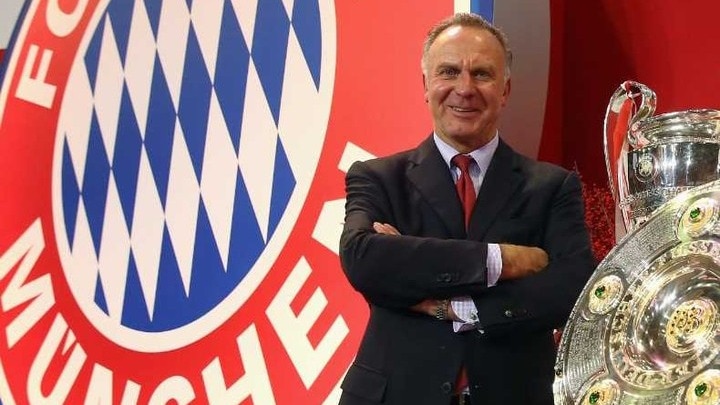

Karl-Heinz Rummenigge has urged football’s leaders to act decisively against soaring player salaries and an increasingly crowded match calendar, warning that the sport risks financial and physical collapse if left unchecked.
He believes the current model for the sport is unsustainable. “Our players should stop complaining! All the contract negotiations I witness with us always go in one direction: ever higher, ever further, ever faster. But all that money has to come from somewhere,” Rummenigge said.
He has long been a critic of spiralling costs, particularly around wages, transfer fees, and agent commissions. Rummenigge has called for UEFA, domestic leagues, clubs, players’ unions, and agents to sit down together and work out a “more rational solution.” Among the measures he supports is a salary cap similar to those in U.S. sports. “If a player at FC Bayern were to earn ‘only’ 15 million a year instead of 20, I still consider that, with all due respect, an insane amount of money,” he said.
Rummenigge warned that without reform, football could become the only industry that consistently produces losses rather than profits. “We’re all driving toward a wall—and no one is ready to slow down,” he cautioned.
Alongside financial concerns, Rummenigge has also raised alarm over the relentless expansion of the football calendar. With UEFA’s new Champions League format, FIFA’s enlarged World Cup, and the planned Club World Cup, players face more matches than ever before. He argues that the saturation threatens not only player health but also the quality of the sport.
“The players are exhausted, and the fans will be too if we overload the calendar,” he said, stressing that more fixtures do not automatically mean more value. Instead, Rummenigge believes fewer but higher-quality matches are the key to maintaining football’s global appeal.
UEFA will introduce new financial sustainability rules next season, restricting clubs to spending no more than 70 per cent of their football revenue on squad costs. While Rummenigge supports the measure, he insists that stricter cost controls and fixture reductions must follow.
“Football must slow down before it’s too late,” he said. “Without change, the sport risks driving itself into crisis—financially and physically.”
Newer articles
Older articles

 IRCTC's AskDisha 2.0: AI Chatbot Simplifies Train Ticket Booking, Refunds, and Information Access
 Google Maps Boosts Navigation Accuracy with Enhanced Orientation API Update
 Shreyas Iyer Named Captain of India A for Series Against Australia A
 US Open: Venus Williams offers update on future after age-defying doubles run ends
 Sophie Molineux Returns from Injury, Named in Australia's Women's World Cup Squad
 TSMC Regains Top 10 Global Value Ranking Amid AI Boom
 Chess Sensation: 9-Year-Old Indian Prodigy Holds Magnus Carlsen to Draw in Online Tournament
 Curran Returns to England's T20I Squad, Duckett Given Rest
 Rishabh Pant's Fearless Batting Revolutionizes Test Cricket: Greg Chappell Draws Adam Gilchrist Comparison
 Mandhana's Maiden T20I Century Fueled by Yadav's Pep Talk; India Dominates England